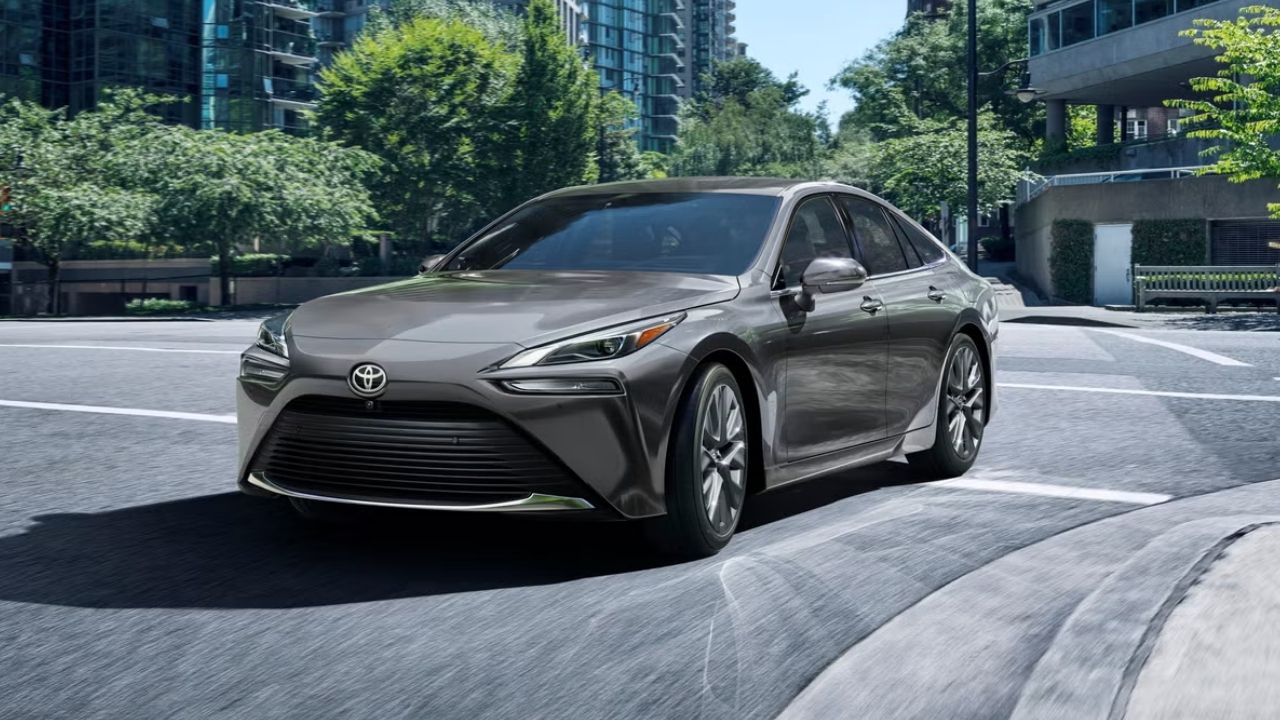
Toyota has taken a major step toward clean mobility in India by initiating real-world testing of its hydrogen fuel-cell vehicle, the Toyota Mirai. Toyota Kirloskar Motor has handed over the second-generation Mirai to the National Institute of Solar Energy for extensive evaluation under Indian driving conditions. This move aligns closely with India’s National Green Hydrogen Mission and highlights hydrogen as a viable long-term alternative to fossil fuels and battery-electric vehicles.
Toyota Mirai India Testing Overview
Toyota Kirloskar Motor has officially commenced real-world testing of the second-generation Toyota Mirai in India. The hydrogen-powered fuel-cell electric vehicle has been delivered to the National Institute of Solar Energy for detailed performance analysis across Indian terrains, climates, and traffic conditions.
This initiative marks one of the most important milestones in India’s hydrogen mobility journey. The testing will provide crucial insights into how hydrogen fuel-cell technology performs in a country known for its diverse weather patterns, road infrastructure, and driving environments.
Toyota’s collaboration with NISE also supports the Indian government’s broader objective of reducing carbon emissions while exploring alternative energy sources that can complement electric mobility.
Summary of Toyota Mirai Hydrogen Testing in India
| Key Aspect | Details |
|---|---|
| Vehicle Tested | Toyota Mirai Second Generation |
| Technology | Hydrogen Fuel Cell Electric Vehicle |
| Testing Authority | National Institute of Solar Energy |
| Driving Range | Around 650 km |
| Refuelling Time | Under 5 minutes |
| Emissions | Zero tailpipe emissions |
| Government Alignment | National Green Hydrogen Mission |
| Official Website | https://www.toyotabharat.com |
Why Toyota Chose India for Real-World Hydrogen Testing
India presents a unique testing environment due to its wide range of climatic zones, road surfaces, traffic density, and driving habits. From extreme heat to heavy monsoons and long-distance highway travel, real-world testing in India provides valuable data that cannot be replicated in laboratory conditions.
The collaboration with the National Institute of Solar Energy ensures that the evaluation remains scientific, unbiased, and aligned with national renewable energy goals. The insights gathered will help policymakers, energy planners, and automakers understand the feasibility of hydrogen vehicles in the Indian context.
Key Focus Areas of the Toyota Mirai Evaluation Program
The real-world testing of the Toyota Mirai will focus on several important performance parameters:
Fuel Efficiency and Range Assessment
One of the primary objectives is to evaluate how the Mirai’s hydrogen consumption behaves under Indian driving conditions. Factors such as traffic congestion, road gradients, and weather conditions will be studied to assess real-world range consistency.
Drivability and Performance
The testing will examine throttle response, acceleration, ride comfort, and overall driving experience. This is particularly important for Indian consumers who often drive in mixed urban and highway conditions.
Climate and Terrain Adaptability
India’s extreme temperatures can significantly affect vehicle performance. The Mirai will be tested in varying temperatures to understand how hydrogen fuel cells respond to heat, humidity, and long-duration usage.
Infrastructure Compatibility
Although hydrogen refuelling infrastructure in India is still in its early stages, this testing phase will help identify challenges and requirements for future hydrogen stations.
Role of National Green Hydrogen Mission
This initiative directly supports India’s National Green Hydrogen Mission, which aims to position the country as a global leader in green hydrogen production and usage. Hydrogen-powered mobility is considered a critical pillar of this mission, particularly for long-distance transport and heavy-duty vehicles.
By testing the Toyota Mirai, India gains access to global hydrogen vehicle expertise while building domestic knowledge and regulatory frameworks. The results of this testing program may influence future policies, incentives, and infrastructure investments.
Toyota’s Long-Term Vision for Hydrogen Mobility in India
Toyota has consistently advocated a multi-pathway approach to carbon neutrality, which includes hybrid vehicles, battery-electric vehicles, and hydrogen fuel-cell technology. The Mirai testing project reflects Toyota’s belief that hydrogen can coexist with electric vehicles rather than compete with them.
According to Toyota Kirloskar Motor, hydrogen vehicles are especially suitable for applications requiring long range and quick refuelling. These attributes make hydrogen a promising solution for commercial fleets, intercity travel, and public transport systems in the future.
Industry and Government Collaboration
The Memorandum of Understanding between Toyota Kirloskar Motor and the National Institute of Solar Energy demonstrates how public-private partnerships can accelerate clean mobility adoption. Such collaborations help bridge the gap between advanced automotive technology and national sustainability objectives.
As stated by Toyota officials, real-world testing under Indian conditions will provide actionable insights that could shape future hydrogen mobility strategies at both industry and policy levels.
Challenges Ahead for Hydrogen Vehicles in India
Despite its advantages, hydrogen mobility faces several challenges in India:
- Limited hydrogen refuelling infrastructure
- High initial vehicle costs
- Need for green hydrogen production at scale
- Safety awareness and regulatory frameworks
However, pilot projects like the Toyota Mirai testing program are essential steps toward addressing these challenges systematically.
Conclusion
The commencement of real-world testing of the Toyota Mirai in India represents a significant leap toward sustainable transportation. By evaluating hydrogen fuel-cell technology under real Indian conditions, Toyota and NISE are laying the groundwork for a cleaner and more diversified mobility future. While large-scale adoption may take time, this initiative sends a strong signal that hydrogen mobility is no longer theoretical but actively being explored on Indian roads.
Frequently Asked Questions
Q. What is the Toyota Mirai?
A. The Toyota Mirai is a hydrogen fuel-cell electric vehicle that generates electricity through a hydrogen and oxygen reaction, emitting only water vapor.
Q. Why is Toyota testing the Mirai in India?
A. India offers diverse driving conditions, making it ideal for evaluating the real-world performance of hydrogen vehicles under varied climates and terrains.
Q. How long does the Toyota Mirai take to refuel?
A. The Mirai can be refuelled with hydrogen in under five minutes.
Q. What is the driving range of the Toyota Mirai?
A. The Toyota Mirai offers an approximate driving range of 650 km on a full hydrogen tank.
Q. Will hydrogen cars be available for Indian consumers soon?
A. Hydrogen vehicles are currently in the testing and pilot phase. Mass-market availability will depend on infrastructure development and policy support.
For More Information Click HERE